
Leadership Lessons from Gordon Ramsay’s “Method: Knife Skills”
2025 MasterClass
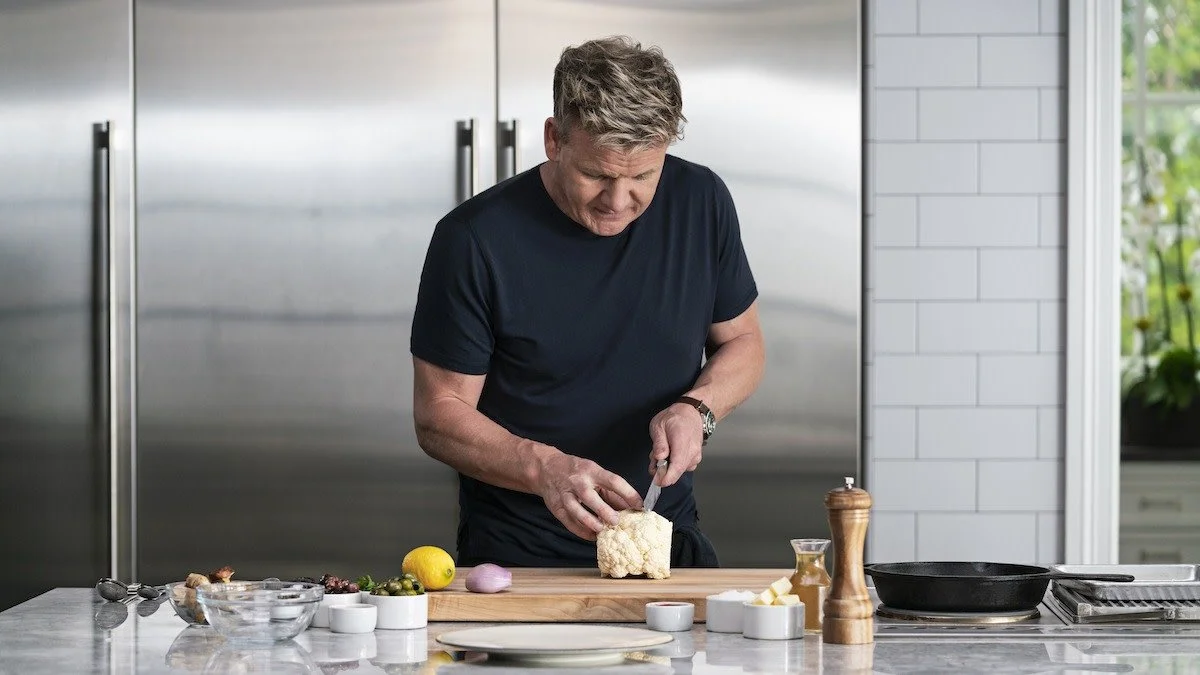
In Gordon Ramsay’s MasterClass, there is a session titled “Method: Knife Skills.” It is simple, technical, and surprisingly profound. In this lesson, he explains how to sharpen your knife, how to hold it, how to move with precision, and most importantly, how to select the right tool for the right purpose. A chef does not randomly swing a blade. Every cut has intention. Every knife has a role. Every movement reflects training, discipline, and awareness.
This is not just culinary instruction. It is leadership instruction.
The same mindset that produces excellence in Ramsay’s kitchen is the mindset that produces excellence in leadership.
Knowing Your Tools
In “Method: Knife Skills,” Ramsay breaks down the purpose of each knife. A chef’s knife is versatile and powerful, but there are moments when only a paring knife will give the finesse required. A boning knife bends for a reason. A serrated knife moves differently. Mastery is not only knowing what the tools are but understanding the nuance of when to use them.
Leadership tools are no different. Tools include communication styles, coaching methods, conflict resolution strategies, emotional intelligence, team strengths, accountability systems, and decision making frameworks. Leaders who treat every situation as if one tool fits all will experience the equivalent of trying to fillet a fish with a bread knife. It will get messy. It will waste time. And it will never produce excellence.
Great leaders know:
When to coach instead of correct
When to listen instead of lead
When to collaborate instead of control
When to delegate instead of dominate
When to bring the team together and when to give them space
Precision is leadership’s version of clean cuts.
Sharpening Your Tools
Ramsay emphasizes sharpening as a non negotiable. A dull knife is not only ineffective. It is dangerous. You apply more pressure, lose accuracy, and increase risk. A sharp knife is safer because it responds quickly, cuts smoothly, and follows direction.
Leadership tools dull too. Without intentional sharpening, leaders begin to rely on outdated tactics, emotional habits, or autopilot methods that no longer serve their teams. Sharpening for leaders means:
Continuous learning
Practicing emotional intelligence
Keeping your communication clear
Updating your strategies to match new environments
Seeking feedback
Reflecting on what could be improved
A dull leader creates unnecessary friction. A sharp leader creates flow.
Technique Over Force
Ramsay teaches that good knife work is not about strength. It is about technique. Smooth, consistent, confident motions produce better results than heavy handed chopping. Leadership thrives on the same principle. It is not about force. It is not about raising your voice or asserting power. It is about using the right technique to create the right outcome.
Leaders who rely on force eventually exhaust themselves and discourage their teams. Leaders who rely on technique inspire trust, efficiency, and mastery.
Respecting the Craft
One of the unspoken lessons in Ramsay’s MasterClass is respect. Respect for ingredients, respect for tools, respect for the process. Knife skills look simple until you try them. Then you realize mastery comes from repetition, precision, and awareness.
Leadership is also a craft that requires respect. When leaders rush, cut corners, or use tools incorrectly, the result is chaos. When they slow down, choose the right approach, and move with intention, the outcome is excellence.
The Leadership Takeaway
Gordon Ramsay’s “Method: Knife Skills” is more than a cooking lesson. It is a reminder that mastery is rooted in detail, discipline, and discernment. Leaders have tools, but only great leaders understand when and how to use them. They sharpen their skills consistently. They choose technique over force. They move with intention instead of impulse.
Leadership, like knife work, is an art.
Precision matters.
Skill matters.
And knowing your tools matters most of all.