The Leadership Philosophy Behind 47 Little Leadership Lessons
Leadership does not begin in the boardroom.
It begins in childhood.
Long before someone earns a title, manages a team, or is entrusted with the responsibility of guiding others, the foundation of leadership is quietly forming in the early years of life. It forms in the way a child learns to handle disappointment, take responsibility, treat others with fairness, manage emotions, and make decisions when no one is watching.
Over the course of my career, I have had the opportunity to work across complex organizations and industries, leading teams, observing leadership structures, and navigating environments where decisions carry real consequences for people’s lives. Through those experiences, one truth became increasingly clear.
Many individuals hold leadership titles, yet the internal foundation required to lead others well was never fully developed.
When you observe closely, you can sometimes see the deeper patterns at play. Unhealed childhood wounds. Lingering insecurities. A need for control. Difficulty managing emotions. At times, even subtle forms of resentment or revenge carried into professional environments.
These dynamics rarely appear on resumes, but they often shape how leaders make decisions, treat others, and exercise authority.
When individuals who are still carrying unresolved internal struggles are placed in positions of influence, the impact is not contained to them alone. It affects teams, cultures, organizations, and ultimately the people those organizations serve.
Leadership, when rooted in insecurity or unresolved pain, can quietly create environments of fear, instability, or mistrust.
This observation led me to ask a deeper question.
What if leadership development started earlier?
What if children were intentionally taught the inner skills required to lead themselves before they were ever responsible for leading others?
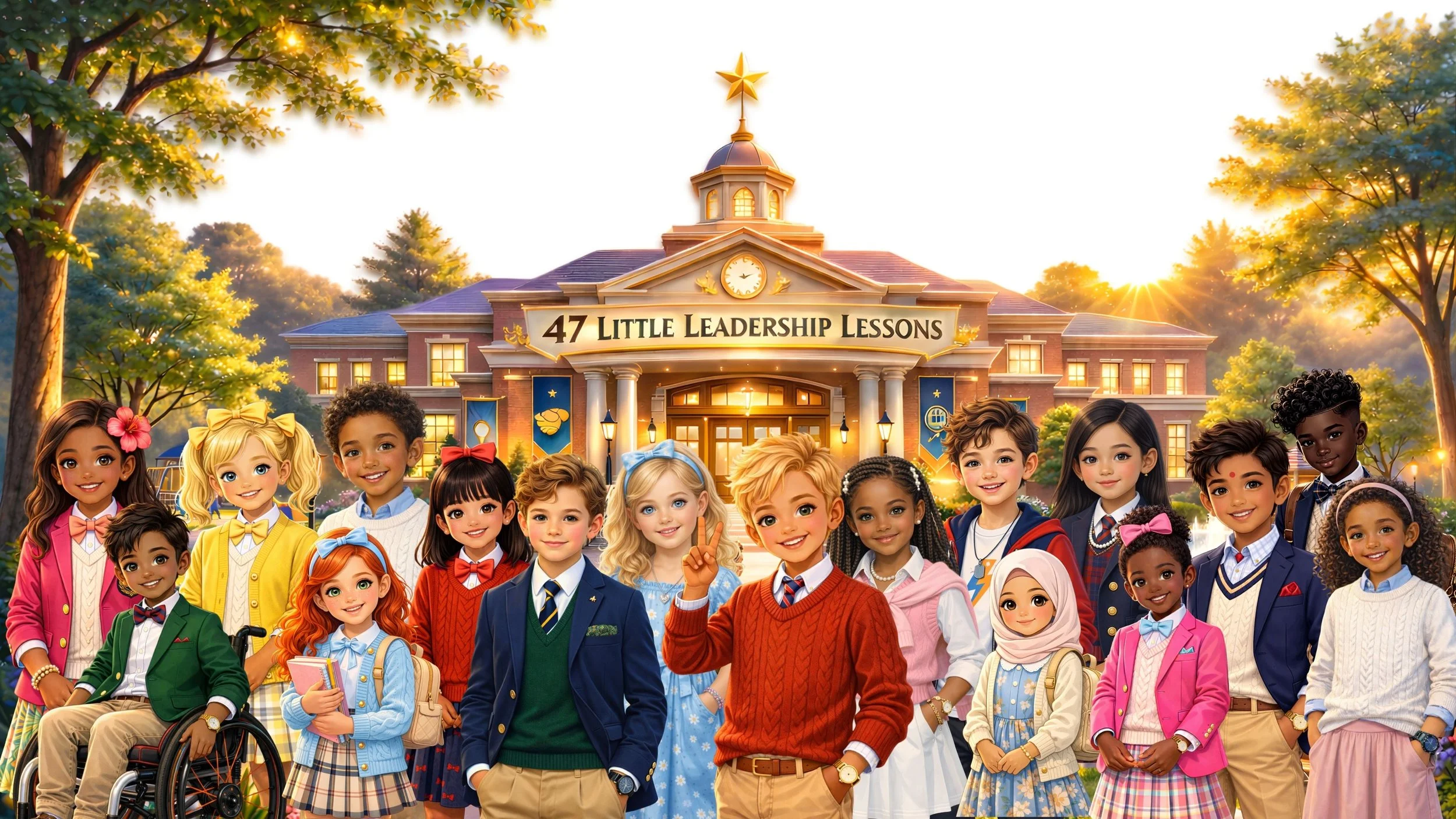
This question became the foundation for my children's book, 47 Little Leadership Lessons.
While my first book, The 47 Basic Rules of Leadership, was written for adults navigating complex systems and organizational leadership, this new work focuses on the beginning of the leadership journey. It addresses the formative years when character, judgment, and emotional awareness first take shape.
47 Little Leadership Lessons introduces children to essential principles such as responsibility, agency, integrity, sound judgment, teamwork, self care, and emotional awareness. Each lesson is grounded in everyday experiences that children encounter in school, friendships, sports, family life, and personal growth.
Rather than presenting leadership as authority or status, the book teaches children that leadership begins with how they lead themselves.
How they handle mistakes.
How they treat others.
How they make thoughtful decisions.
How they remain grounded when emotions run high.
How they choose responsibility instead of blame.
These early lessons matter more than many people realize.
A child who learns accountability becomes an adult who can accept responsibility.
A child who learns emotional awareness becomes an adult who can manage conflict with maturity.
A child who learns fairness becomes an adult who leads with integrity.
A child who learns agency understands that their choices matter and that leadership is not about control over others, but about stewardship of responsibility.
When these principles are learned early, leadership later becomes an extension of character rather than a performance of authority.
This is why 47 Little Leadership Lessons was written intentionally as more than a storybook. It was designed as a leadership foundation for young minds. A resource that children can return to repeatedly as they grow, encountering lessons that remain relevant at every stage of development.
Because the leaders who shape our institutions tomorrow are sitting in classrooms today.
They are learning how to treat their classmates.
They are learning how to respond to failure.
They are learning how to handle success.
They are learning how to manage their emotions.
Those small moments form the blueprint of the leaders they will eventually become.
Leadership crises in adulthood often begin as lessons that were never taught in childhood.
If we want stronger leaders in the future, the work cannot begin when someone receives a promotion or a title. It must begin when character is first forming.
47 Little Leadership Lessons was written with that belief at its core.
Because leadership is not simply about guiding others.
It is about becoming the kind of person others can trust to follow.