
When Everyone Makes Their Own Rules, No One Wins
Every strong organization understands that structure is not about creating a militant environment. It is about creating a foundation that protects the mission, the people, and the standards that allow excellence to thrive. When there are no clear rules, and when leaders do not enforce them with consistency, the environment begins to slide into something subtle yet dangerous. A free for all. And a free for all slowly turns into chaos, misalignment, inconsistency in output, and individuals creating their own rules that are not always in the best interest of the organization or the people being served. One of the clearest real world parallels is found in communities with strong Homeowners Associations. Some of the best HOAs understand that their rules were never designed to restrict residents. They were designed to protect the comfort, safety, and quality of the community by maintaining a shared standard. In contrast, when a community has no HOA or has one with weak enforcement, everything becomes subjective. One neighbor may decide they no longer want to trim their lawn. Another may choose to store junk outside of their home. Another may paint their house a color that completely disrupts the look and feel of the neighborhood.
Leadership Beyond Buzzwords
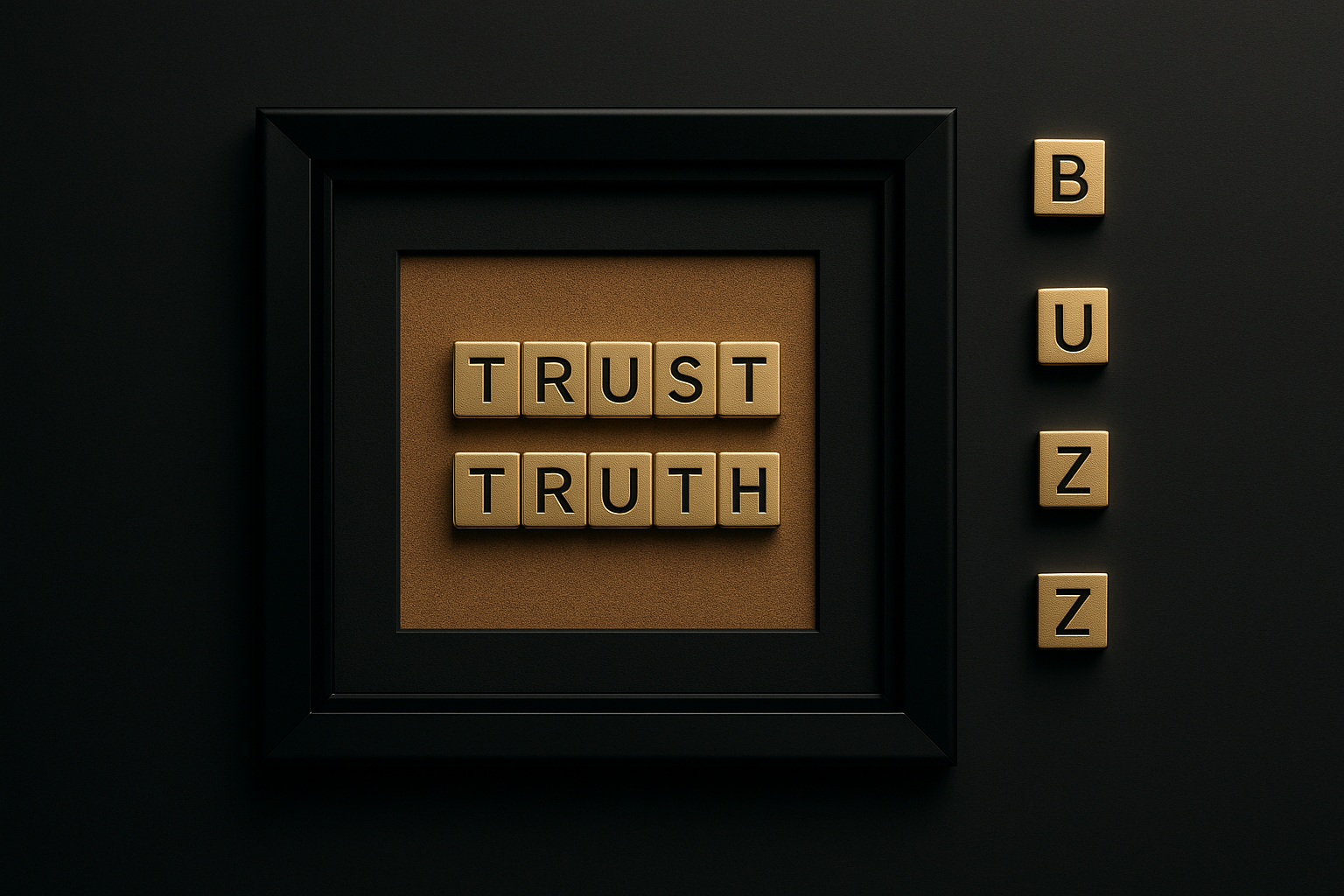
A quiet but undeniable awareness is growing across workplaces, showing that words alone are no longer enough. Leaders can no longer rely on impressive language or well rehearsed statements to demonstrate commitment. Employees, stakeholders, and partners want action, consistency, and delivery. Recent global data shows that workers increasingly expect transparent communication and follow through from their leaders, not polished rhetoric (Edelman, 2024). Buzzwords are also losing their influence. The carefully curated phrases that once sounded impressive are becoming meaningless. People can sense when language is overly polished or engineered to create an image rather than express the truth. Many employees are now preferring communication that is clear, direct, grounded, and free of unnecessary jargon. They want raw truth instead of rehearsed terminology. Recent insights confirm that authenticity is becoming one of the most valued leadership traits across the workforce (McKinsey & Company, 2023).

Leadership Lessons from Gordon Ramsay’s “Method: Knife Skills”
In Gordon Ramsay’s MasterClass, there is a session titled “Method: Knife Skills.” It is simple, technical, and surprisingly profound. In this lesson, he explains how to sharpen your knife, how to hold it, how to move with precision, and most importantly, how to select the right tool for the right purpose. A chef does not randomly swing a blade. Every cut has intention. Every knife has a role. Every movement reflects training, discipline, and awareness. This is not just culinary instruction. It is leadership instruction. The same mindset that produces excellence in Ramsay’s kitchen is the mindset that produces excellence in leadership. In “Method: Knife Skills,” Ramsay breaks down the purpose of each knife. A chef’s knife is versatile and powerful, but there are moments when only a paring knife will give the finesse required. A boning knife bends for a reason. A serrated knife moves differently. Mastery is not only knowing what the tools are but understanding the nuance of when to use them.

The Differentiated Roles of Leading and Managing and Why Learning Both Matters
In organizational environments, people often assume that leadership and management require the same abilities. In reality, the roles of leading and managing are distinct. They call for different approaches, different skills, and different areas of focus. Leaders inspire people and shape vision. Managers build systems and create structure. Both capacities are needed in high performing organizations, and both can be learned. Individuals who intentionally develop these skills strengthen teams, improve culture, and create meaningful results. Management centers on organization and execution. It involves planning, scheduling, documenting, assigning responsibilities, and monitoring outcomes. Managers simplify complexity by breaking goals into clear actions. They manage budgets, coordinate resources, and protect timelines.

How Does a Mindset Diet Shape Your Ability to Lead Effectively
Leadership habits develop over time, and many leaders already practice intentional mental discipline without naming it. They choose their inputs carefully, monitor their emotional energy, and recognize what conversations or content support clarity. However, there may be some who have not practiced mental dieting. They might focus heavily on external performance and strategic execution while overlooking what they repeatedly consume mentally every day. A mindset diet is the awareness that everyday content, conversations, and media inputs shape how you think, communicate, and make decisions. What you take in becomes the internal script that influences your responses and perceptions. Mental consumption includes background television, news updates, social feeds, constant texting, and absorbing complaints from others. Over time, these inputs create mental patterns that can either strengthen a leader’s perspective or quietly distort it.